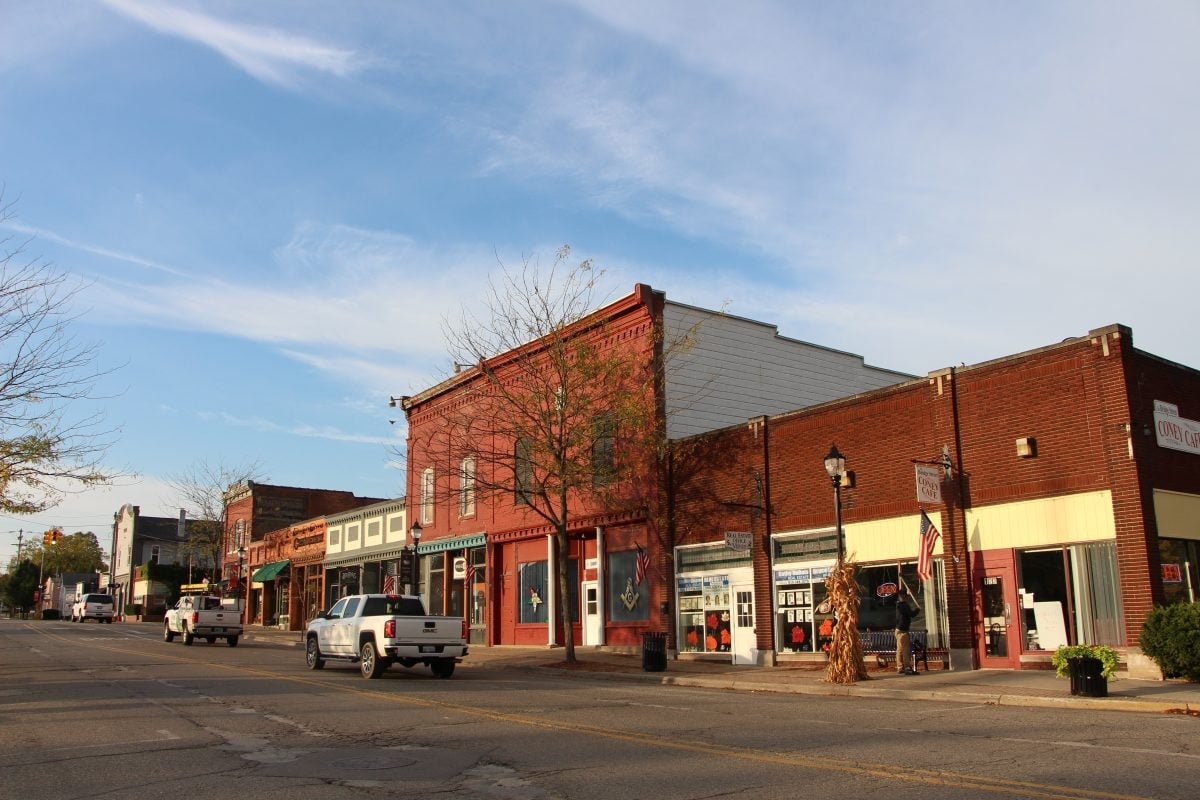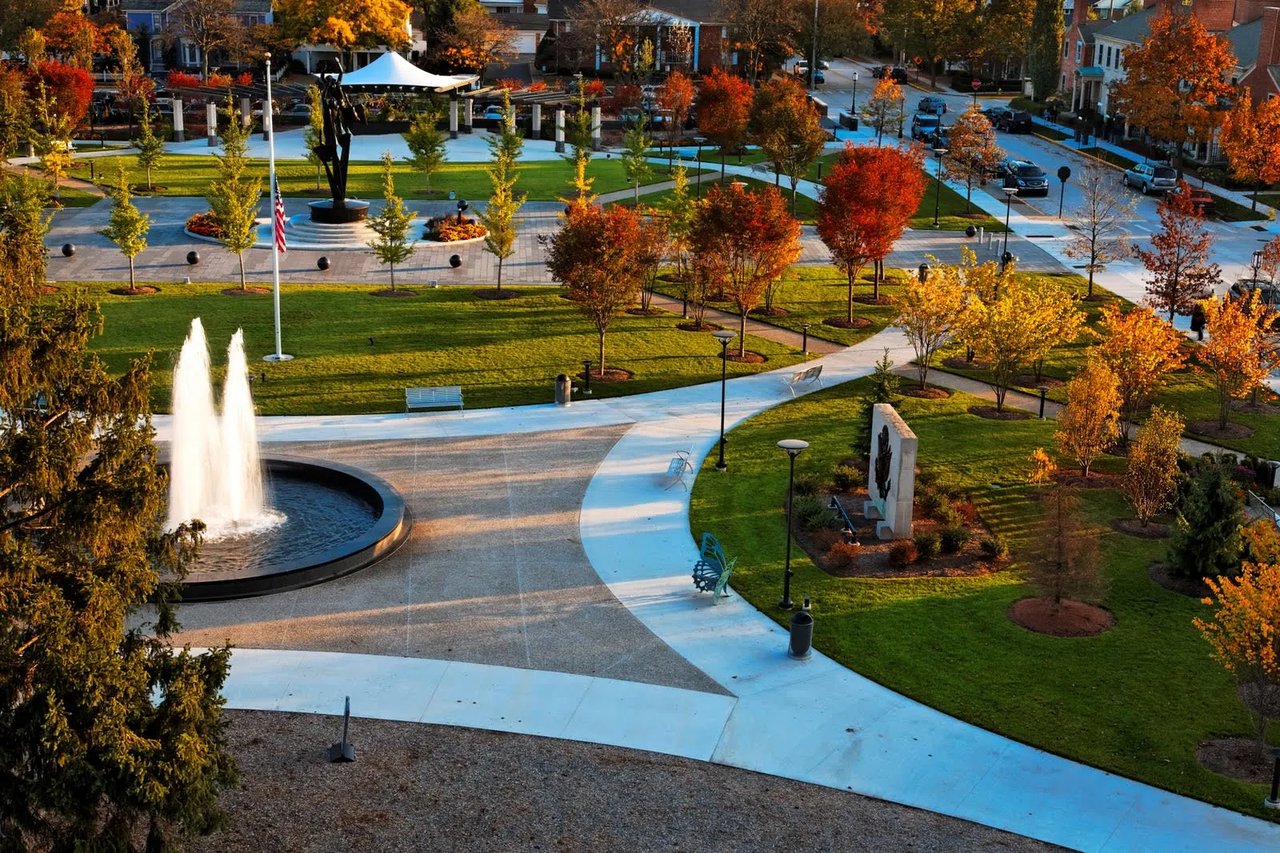
Cross the railroad tracks from Kellogg Park on Starkweather Street and the block feels different from downtown Plymouth within about thirty seconds. Fewer awnings, older brick, a lot less foot traffic on a Tuesday afternoon. For years that was the whole story of Old Village: the historic half of town everyone drove past on the way somewhere else. That story stopped being accurate sometime between East Elm Kitchen Co. opening its doors in November 2023 and Old Village General opening on Mill Street in July 2025.
Four businesses have opened in Old Village across that stretch, and a fifth project that everyone keeps asking about still has not broken ground. That gap between what actually opened and what is still just a rendering is the part of the neighborhood story that gets flattened every time someone writes "Old Village is having a moment." It is having a moment. But the moment has a very specific bottleneck, and it is not the one people assume.
What actually opened, and when
Here is the sequence, in the order it happened rather than the order people tend to remember it:
| Business | What it is | Address | Opened |
|---|---|---|---|
| East Elm Kitchen Co. | Kitchenware and home goods shop | 173 W. Liberty St | November 2023 |
| Red Ryder Lounge | Vinyl-themed cocktail bar | 584 Starkweather St | September 17, 2024 |
| Chicane | Steakhouse and event space | Old Village | February 2025 |
| Old Village General | Corner store with a deli counter | Mill Street | July 2025 |
East Elm Kitchen Co. was the first domino. Owner Rebecca Nicholson leased a condemned building and turned it into a specialty cookware shop, betting on foot traffic before the foot traffic fully existed. She told a local news crew she had her eye on that building even in its roughest state and had done the research to expect continued growth. Roughly eighteen months after opening, she was seeing that growth arrive on her own block.
Red Ryder Lounge took over the space that used to be the Honey Hole, at 584 Starkweather, with owner Jeff O'Brien, a former general manager of Fox Hills Golf and Banquet Center, building the concept around a wall of more than 4,000 LPs and vinyl records. Chicane followed a few months later as a steakhouse and entertainment venue, giving Old Village its first real fine-dining anchor. Old Village General, opened by builder and carpenter Anthony Giglio, filled in the piece the neighborhood was missing most: a deli-counter corner store, the kind of place a kid can ride a bike to with a few dollars.
Four different business types, four different owners, none of them chains. That is not a coincidence. It is what happens in a district small enough that new tenants can still take a chance on a single storefront instead of needing a national brand's balance sheet.
The piece that has not moved
The project people actually ask about is the historic train depot at 900 Starkweather. A Dearborn Heights developer called Califur LLC has proposed turning the old Pere Marquette depot into a restaurant and bar called the Villager, combining American diner classics with Middle Eastern touches: smash burgers, grilled skewers, gourmet hot dogs, pizza, hummus with pita. The renderings show outdoor games, fire pits and a green space connecting Starkweather to Mill Street.
The application went before the Plymouth Planning Commission back in March 2025, and as of the most recent reporting on the project it is still working through the city's approval process rather than under construction. Two things are slowing it down, and neither is what most people guess.
The first is zoning. The depot site does not permit restaurants that serve alcohol, so Califur had to file a Planned Unit Development application, which requires proving the project delivers a public benefit the underlying zoning could not otherwise achieve. The second, more concrete hurdle: at the time of the application, Plymouth had no available liquor licenses for the project to use. A restaurant built around a bar concept cannot easily open without one.
There is also a smaller, more human wrinkle in the story. The developer's application described restoring the depot to its 1871 appearance. Local historian Ellen Elliott, who co-authored a book on Plymouth's railroads, pointed out at the same meeting that the original 1871 depot burned down in 1893, and the building still standing is the replacement built after the fire. She said she supports the project but wants the restoration to be accurate to what actually exists, not to a building that has not stood in over a century. It is a small correction, but it is the kind of detail that only surfaces when someone who has spent decades with the town's history is in the room.
None of this means the Villager will not eventually open. It means the honest answer to "when is that restaurant opening" is that it is waiting on a licensing and zoning process, not on drywall.
Why the city is paying attention now
The reason Old Village is drawing this much civic energy at once traces back to a resolution the Plymouth city commission approved: a resolution of intent to create a Corridor Improvement Authority for the district. A CIA works through tax increment financing, meaning that as new development raises property values and generates higher property tax revenue within the district boundaries, a portion of that increase gets reinvested locally instead of flowing entirely into the general city fund. City commissioner Jennifer Kehoe framed it as a tool for economic development specifically inside the corridor. Michigan's Public Act 57 of 2018 is the state law that makes this financing structure possible for a district like this one.
For a resident, the practical version of that is simple: as Chicane, Red Ryder, East Elm Kitchen Co. and Old Village General raise the assessed value of the buildings around them, the city has a formal mechanism to funnel some of that new tax revenue back into streetscape, infrastructure and further redevelopment in Old Village specifically, rather than treating it as one line item in a citywide budget.
Trish Horstman, president of the Old Village Association and owner of Little Needles Tattoo, put it plainly: the association has been trying to get attention on this stretch of town for a long time, and it is finally starting to arrive. Jan Waller, who has lived in Old Village since 2016 and joined the association, put it more simply: "We are a hot spot, we are a hot spot now."
What this actually changes if you already live here
If you have not walked over from Kellogg Park in a while, the honest map right now looks like this: Red Ryder for a night out with a genuinely different feel than anything on Main Street, Chicane if you want a sit-down dinner without driving to Birmingham, East Elm Kitchen Co. if you need a wedding gift or just want to look at good cookware, and Old Village General for the errand-run version of the same walk. The depot is worth watching, not worth planning around yet. If the Villager clears its zoning and licensing hurdles, it will be genuine news. Until then, treat the renderings as exactly what they are.
The bigger pattern is that Old Village stopped being the quiet half of Plymouth by way of four separate, unrelated decisions by four different owners, not a single master plan. The Corridor Improvement Authority is the city catching up to that momentum after the fact, not creating it. That is usually how the more interesting Michigan neighborhoods change: a few people bet on a building before anyone else would, and the paperwork follows.
If you are watching this corner of Plymouth for reasons that go beyond where to grab dinner, that is worth a longer conversation. Glover Agency tracks these shifts block by block across Metro Detroit, and if you want a clearer read on what a specific address or district is actually worth right now, See Your Market Value is the place to start.